The 12 Principles of Animation
The 12 Principles of Animation
The twelve principles of animation were created by Disney animators in the 1930s. They provide a foundation for creating more fluid, realistic, and expressive animations. Below, we detail each of them with examples.
1. Squash and Stretch
The most important principle of animation, giving a sense of weight and flexibility to drawn objects.

2. Anticipation
Used to prepare the audience for an action, and to make the action appear more realistic.

3. Staging
Directs the audience’s attention, making it clear what is of greatest importance in a scene.

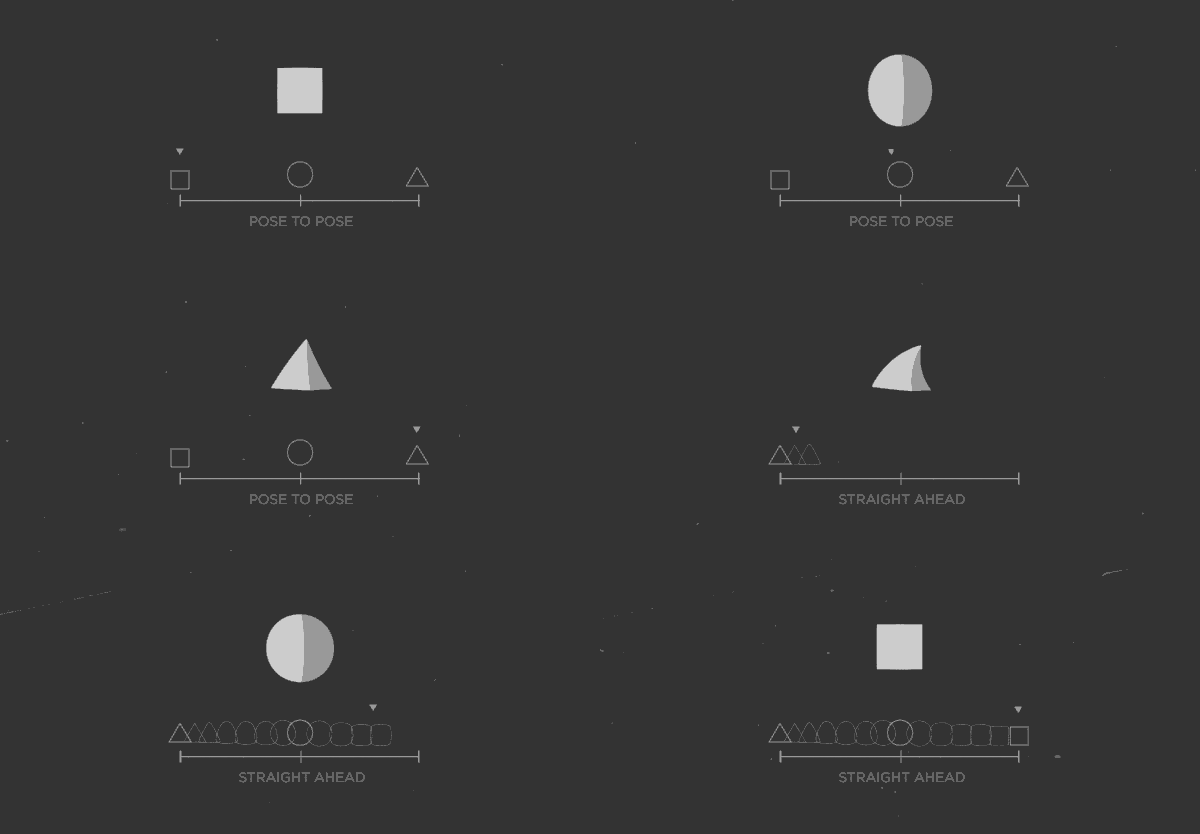
4. Straight Ahead and Pose to Pose
Two different approaches to the drawing process, each with its own strengths.
5. Follow Through and Overlapping Action
Techniques that give the impression that characters follow the laws of physics.

6. Slow In and Slow Out
Adding more frames near the beginning and end of a movement to create a realistic easing effect.

7. Arc
Most natural action follows an arched trajectory, providing greater realism.

8. Secondary Action
Adding secondary actions to the main action gives a scene more life.

9. Timing
The number of drawings or frames for a given action, which dictates the speed of the action on film.

10. Exaggeration
Remaining true to reality, but presenting it in a wilder, more extreme form.

11. Solid Drawing
Taking into account forms in three-dimensional space, giving them volume and weight.

12. Appeal
The charisma in an animated character that makes the audience connect with them.